
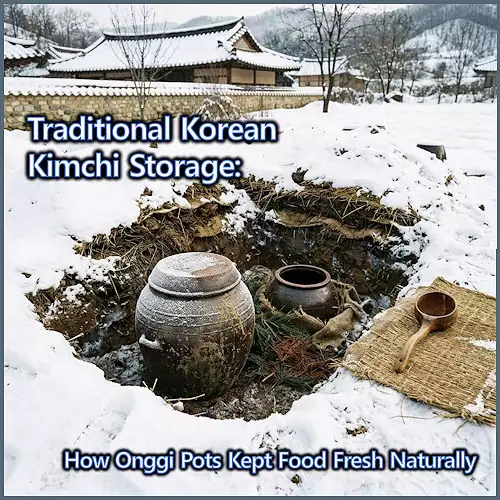
How did people survive harsh winters without refrigerators? The answer lies in traditional Korean kimchi storage, a method built on nature, patience, and quiet precision. This practice shaped not only food, but an entire way of living.
I have studied traditional fermentation methods and observed how older generations handled seasonal preservation. I also rely on cultural records and real practices that are still used in parts of Korea today.
1. The Problem of Winter Preservation
- Before modern appliances, food spoilage was a constant risk. Traditional Korean kimchi storage emerged as a response to long winters and limited fresh supplies. People needed reliable methods for Korean winter food storage that could last for months.
- Without proper systems, vegetables would rot or freeze. This forced communities to think beyond simple storage. The solution had to be stable, natural, and repeatable.
2. How Onggi Solved the Storage Challenge
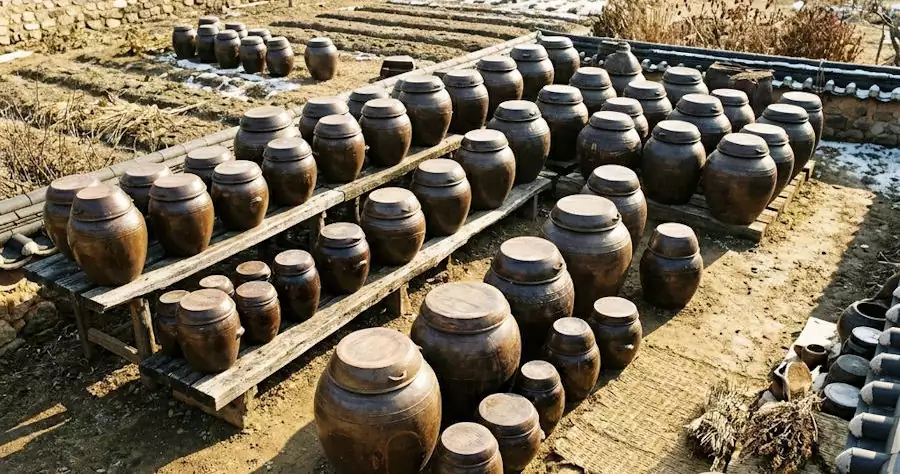
- The brilliance of this traditional storage method lies in the use of onggi pots. These clay containers allowed air exchange while blocking harmful elements. This created the perfect condition for slow fermentation.
- At the same time, Korean winter food storage relied on burying these pots underground. Soil acted as insulation, keeping temperatures steady. This prevented freezing and supported beneficial bacteria.
3. Why Underground Storage Was Essential
- Temperature control was the core of traditional Korean kimchi storage. Underground placement reduced extreme fluctuations. This made fermentation predictable and safe.
- For winter preservation, consistency mattered more than speed. The ground maintained a natural balance that machines now try to replicate. This method also protected food from sunlight and wind.
4. The Science Behind Natural Fermentation
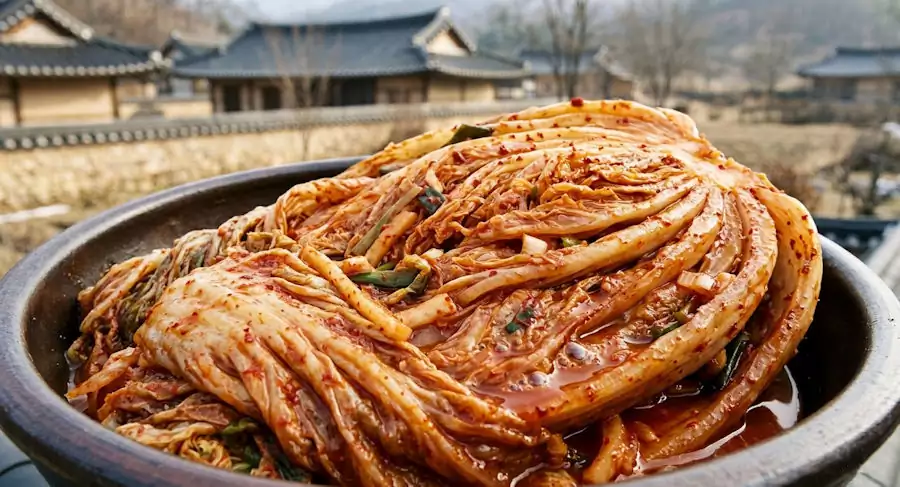
- Traditional Korean kimchi storage works because of microbial activity. Good bacteria grow slowly in cool environments. This process enhances flavor while preserving nutrients, supported by the basic principles of how fermentation works.
- In Korean winter food storage, fermentation replaced refrigeration. Salt, time, and temperature worked together. This created a system that required no electricity but delivered reliable results.
5. Practical Lessons You Can Use Today
- You can still apply principles from this traditional preservation technique at home. Use breathable containers and avoid sudden temperature changes. Even modern kitchens benefit from these ideas.
- For those exploring winter food preservation techniques, start small. Try controlled fermentation in cool spaces. This approach improves both taste and shelf life without complex tools.
6. Cultural Meaning Beyond Preservation
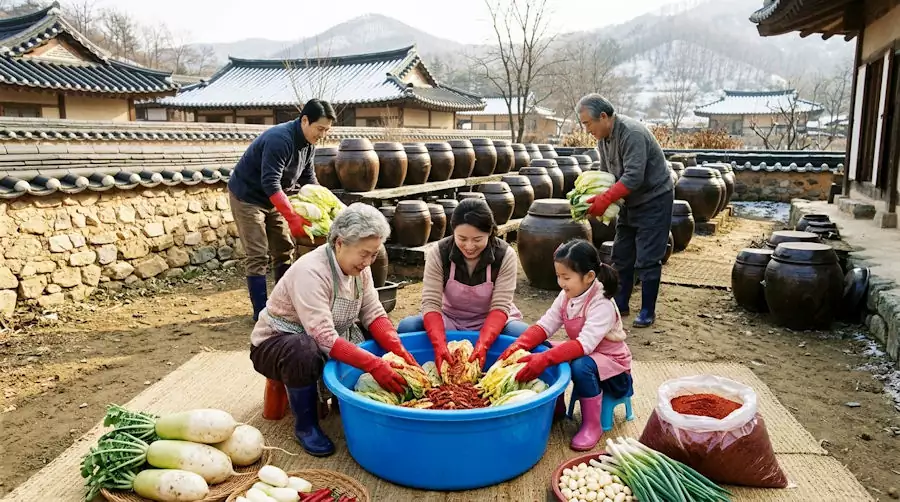
- Traditional Korean kimchi storage is not just about food. It reflects preparation, patience, and seasonal awareness. Families gathered to prepare large batches before winter.
- This made Korean winter food storage a shared cultural event, connecting traditions that also shaped Korean BBQ dishes like bulgogi enjoyed today. Knowledge passed through generations, shaping identity. The method became a symbol of resilience and adaptation.
7. Expanding the Tradition in Modern Times
- Today, this traditional fermentation system inspires modern food science. Refrigerators now mimic the stable conditions once created underground. Yet the original method still holds value.
- As interest in natural living grows, traditional winter storage methods gain attention worldwide. People seek sustainable and low-energy solutions. This ancient system offers both.
8. Conclusion: A Quiet but Lasting Wisdom
Traditional Korean kimchi storage shows how simple ideas can solve complex problems. It remains relevant because it works with nature, not against it.
Even now, Korean winter food storage reminds us that preservation is not just about keeping food – it is about understanding time, environment, and balance.