
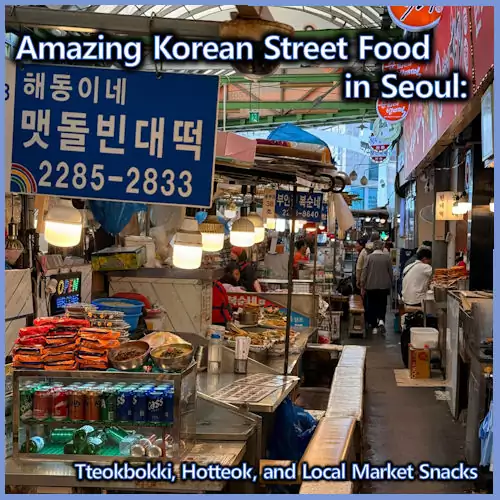
Korean street food in Seoul may look like a simple meal from a small roadside stall, but one warm bite can reveal how the city eats, moves, and gathers after dark. Why do travelers remember these local market snacks long after they leave Korea? The answer often begins with spicy tteokbokki, sweet hotteok, and the quiet excitement of choosing food like a local.
1. Why Korean Street Food in Seoul Feels Different
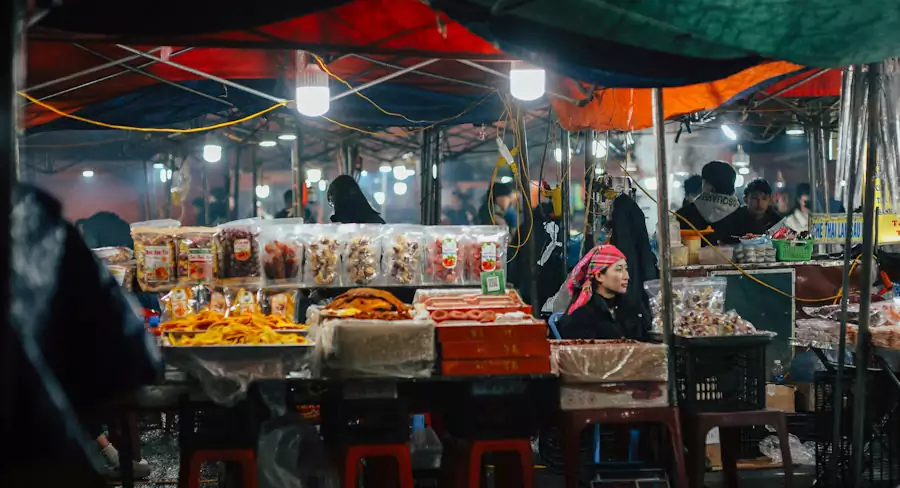
- Korean street food in Seoul is not only about eating quickly. It is about standing near a warm stall, hearing short orders, and watching cooks serve food with practiced hands.
- Many visitors look for famous dishes first, but the real charm often comes from local market snacks placed beside them.
- I have visited Seoul food alleys in different seasons, and the mood changes with the weather. One of my favorite memories is standing under a small plastic tent during a sudden rain shower, holding a warm cup of broth while watching the steam rise from the stalls.
- This guide is based on common market scenes, ordinary prices, and foods that travelers can usually find without special planning.
- Visitors who want to understand Korean food more deeply can also read about the traditional Korean kimchi storage onggi method, which shows how everyday Korean dishes are connected to older food habits.
2. Tteokbokki: The Spicy Snack Locals Still Love
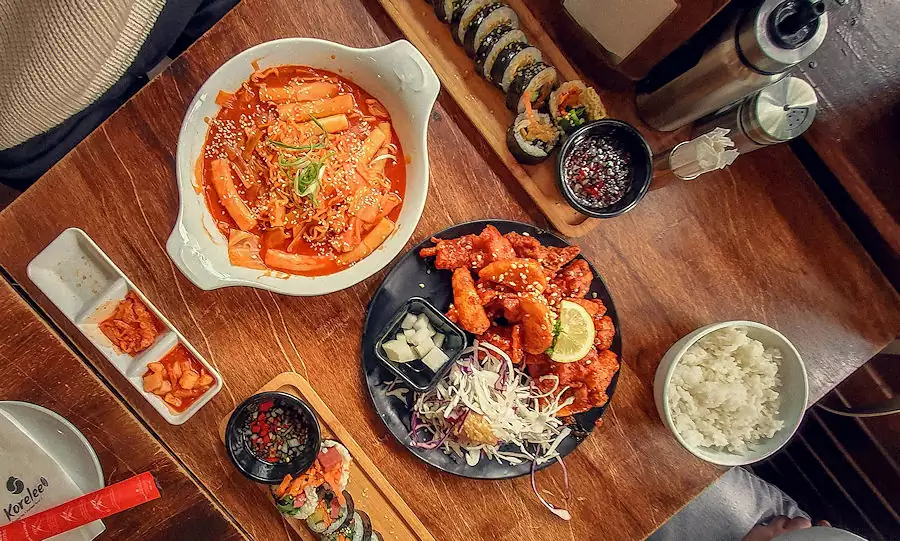
- Tteokbokki is one of the easiest ways to understand Korean street food in Seoul.
- The rice cakes are chewy, and the red sauce is usually sweet before it turns spicy. Some stalls add fish cakes, boiled eggs, or cabbage, so the taste can change from place to place.
- The small problem for first-time visitors is the heat level, because the color does not always tell the whole story.
- A safe solution is to order one small portion and share it before buying more. If you find it a bit too spicy, I personally recommend dipping a piece of fried seaweed roll (Gimmari) into the sauce; the crispy texture and savory filling perfectly balance the heat.
- After that, travelers can compare it with other local market snacks nearby.
3. Hotteok: A Sweet Break Between Busy Streets
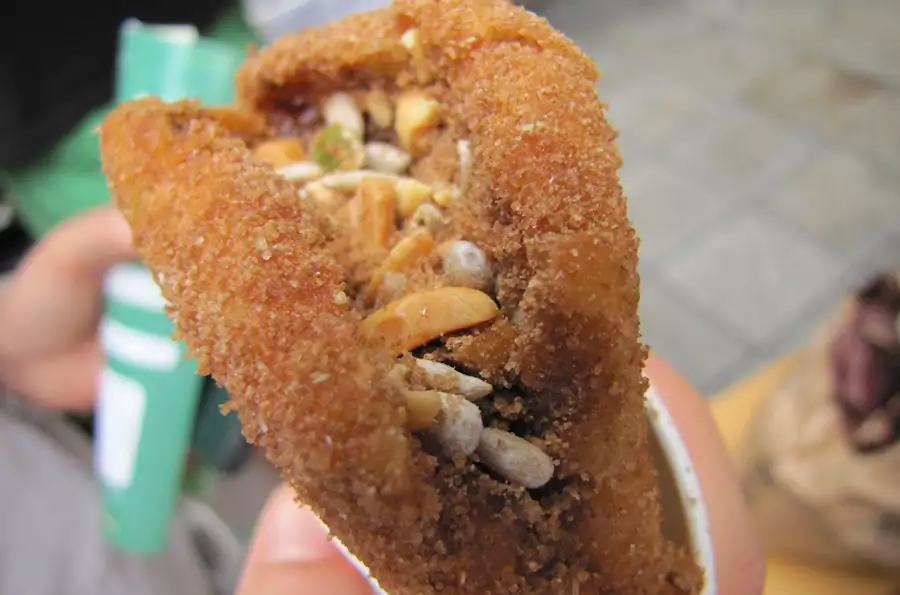
- Hotteok gives Korean street food in Seoul a softer and sweeter side.
- The pancake looks plain outside, but the inside often holds brown sugar, cinnamon, and seeds. It is best eaten carefully because the filling can be very hot.
- In winter, people often hold it in a paper cup and eat it while walking. This is why hotteok works well after spicy food.
- It also balances the stronger flavors of local market snacks without feeling too heavy.
4. Tips for Ordering Korean Street Food in Seoul (Language & Payment)
- Ordering Korean street food in Seoul is easier when you know a few simple habits.
- Pointing is normal, and many stalls show prices on small signs.
- You can say “igeo hana juseyo,” which means “one of this, please.”
- Cash can still be useful in older markets, though many places accept cards now. The best approach is to watch how locals order, then follow the flow calmly.
- This small confidence helps visitors enjoy local market snacks instead of worrying about the line.
4.1. What to Try First
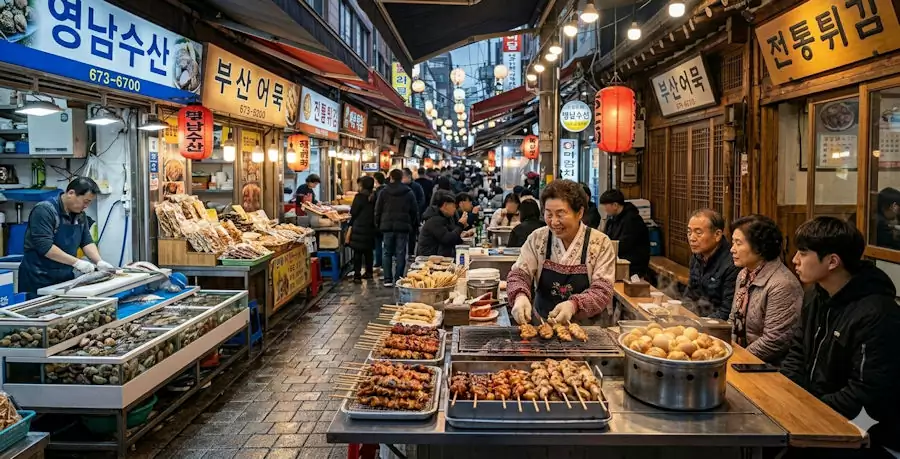
- A simple first round can include tteokbokki, hotteok, fish cake soup, and a fried snack.
- This mix shows spicy, sweet, warm, and crispy flavors in one short walk. Korean street food in Seoul becomes easier to understand when you taste different textures together.
- Do not rush the meal, because the fun is in moving from one stall to the next.
- Many local market snacks are small, so sharing is a smart way to try more.
4.2. Where the Experience Feels Natural
- Busy areas such as traditional markets and evening food streets are good starting points.
- Travelers who want to plan routes around markets and food streets can also check official Seoul travel information before visiting.
- The exact place matters less than the atmosphere, because Korean street food in Seoul is built around movement and quick choices.
- A stall with steady local customers is often a good sign. When I visit Gwangjang Market or the alleys of Myeong-dong, I always look for the places where office workers are gathered after a long day – that is where you will find the most authentic flavors.
- Travelers should also keep basic manners in mind, such as stepping aside after ordering.
- That simple habit makes the experience smoother for everyone.
| Snack Name | Flavor Profile | Key Ingredients | Best Time |
|---|---|---|---|
| Tteokbokki | Spicy & Sweet | Rice cakes, Gochujang | Lunch / Late Night |
| Hotteok | Sweet & Nutty | Brown sugar, Seeds | Winter / Dessert |
| Eomuk | Savory & Warm | Fish cake, Broth | Cold Weather |
| Gimbap | Fresh & Salty | Rice, Seaweed, Veggies | Quick Meal |
5. Final Thoughts: A Small Bite of Seoul
Korean street food in Seoul can be spicy, sweet, crowded, and comforting at the same time. Tteokbokki may bring energy, hotteok may bring warmth, and local market snacks may bring small surprises. A visitor does not need a perfect plan to enjoy them. Sometimes the best memory begins with one short order at a noisy stall.