

I still remember my first Korean restaurant meal. Before I even touched the main dish, the table was suddenly covered with small plates. That moment made me wonder why Korean restaurants give free side dishes and why this tradition of free side dishes in Korean restaurants feels so important to the dining experience. The answer reveals much more than food. It opens the door to Korean hospitality, culture, and the meaning of Jeong.
1. What Are Free Side Dishes in Korean Restaurants?
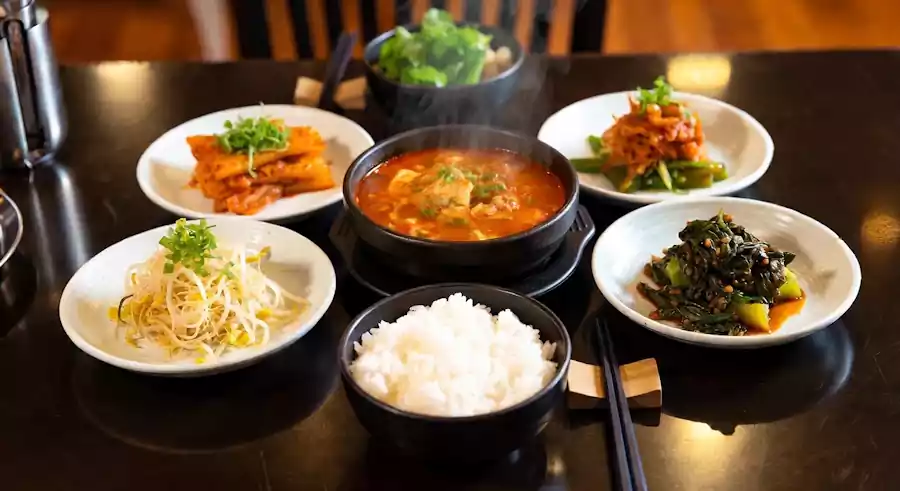
In Korean cuisine, the small dishes served with a meal are called banchan. These are the free side dishes in Korean restaurants that arrive automatically when guests sit down. They often include kimchi, pickled radish, seasoned spinach, or bean sprouts.
Banchan are not appetizers. Diners eat them together with rice and the main dish throughout the meal. Each dish adds a different flavor, texture, or level of spice.
Because of this variety, the table looks full and balanced even before the main dish arrives.
1.1 Common Examples of Banchan
- Typical dishes include kimchi, stir-fried potatoes, marinated tofu, and vegetable salads. Some restaurants also serve fish cakes, seaweed salad, or small seafood dishes.
- The selection often changes depending on the restaurant and season.
1.2 How Banchan Fits Into Korean Meals
- Korean meals focus on harmony between flavors. Spicy, fermented, fresh, and savory tastes work together to support the main dish.
- This balance is one reason Korean dining feels rich even with simple ingredients.
2. Why Korean Restaurants Give Free Side Dishes
Many travelers naturally ask why Korean restaurants give free side dishes instead of charging separately. The answer comes from traditional Korean dining habits.
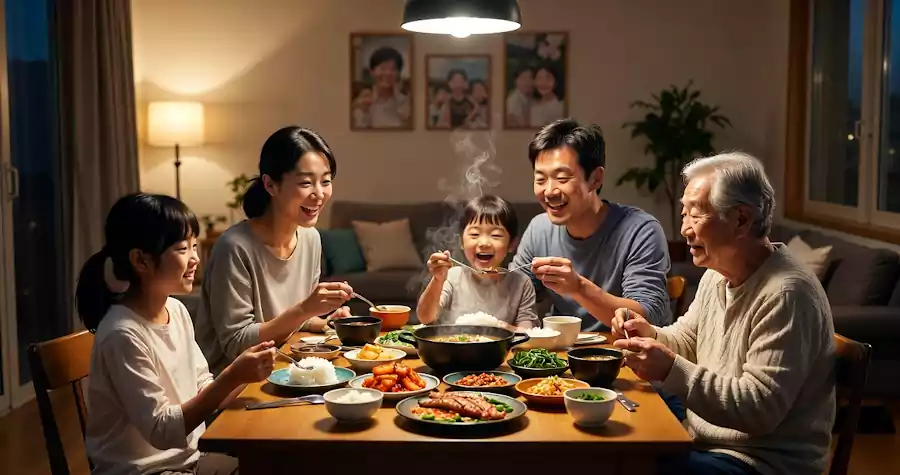
In Korean households, families usually prepare several side dishes to share during meals. Restaurants adopted the same structure so customers could enjoy the same communal dining experience.
Serving multiple dishes also communicates hospitality. A table filled with food signals that guests are welcomed and respected.
2.1 Sharing as a Core Dining Habit
- Korean meals often place dishes in the center of the table. Everyone shares the same plates.
- This shared style encourages conversation and interaction during the meal.
2.2 Restaurants Reflect Home-Style Culture
- Many Korean restaurant owners believe that meals should feel warm and comfortable. Offering side dishes helps recreate the feeling of eating at home.
- This cultural mindset explains why free side dishes in Korean restaurants remain common today.
3. The Cultural Meaning Behind the Tradition
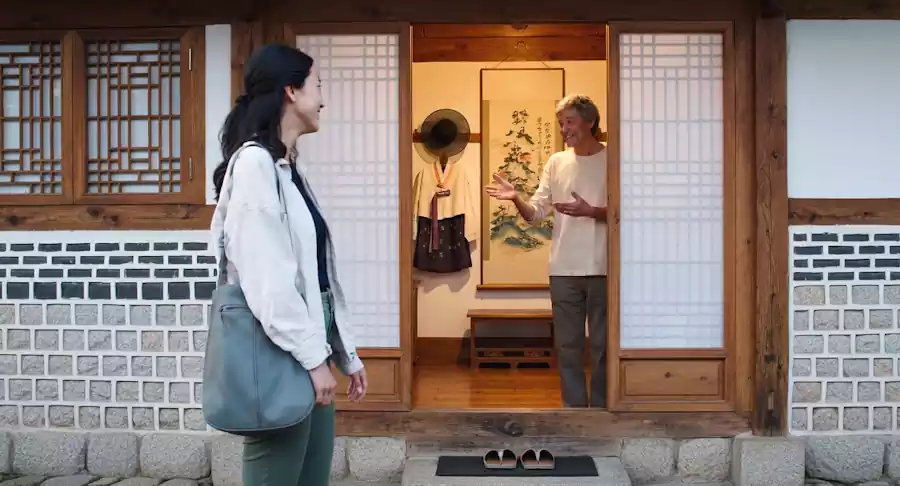
To truly understand why Korean restaurants give free side dishes, it helps to learn the concept of Jeong.
Jeong is a Korean word that describes emotional warmth, care, and connection between people. It develops slowly through everyday interactions.
In daily life, Koreans often show care through food. Offering extra dishes or refilling plates is a simple way to express kindness. That is why free side dishes in Korean restaurants feel natural rather than unusual.
Restaurant owners often continue this tradition because it reflects generosity and respect toward guests.
3.1 Jeong in Korean Culture
- Jeong appears in friendships, family relationships, and even business connections.
- Sharing meals is one of the most common ways people build this emotional bond.
3.2 Food as a Symbol of Hospitality
- Food often represents care in Korean culture. Providing more dishes can signal welcome, friendship, and gratitude.
- Because of this tradition, meals often become moments of connection rather than just eating.
4. Practical Tips for Enjoying Free Side Dishes
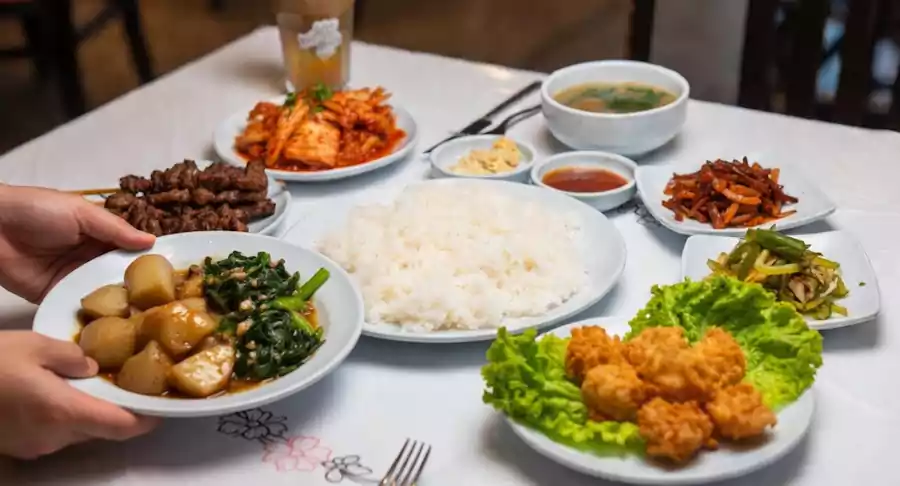
Visitors sometimes feel unsure about how to handle free side dishes in Korean restaurants. The most important rule is simple. Treat the dishes as shared plates for the entire table.
Take small portions first so everyone can try each dish. Many restaurants also allow refills for certain banchan if you politely ask.
Trying different combinations with rice or the main dish can help you experience the full range of Korean flavors.
4.1 Can You Ask for Refills?
- Yes, many restaurants allow refills. Simple vegetable dishes such as kimchi or bean sprouts are often refillable.
- However, policies may vary depending on the restaurant.
4.2 Basic Dining Etiquette
- Use serving utensils when available. Avoid taking large portions from shared plates.
- This small courtesy helps everyone enjoy the meal together.
5. Related Korean Dining Traditions
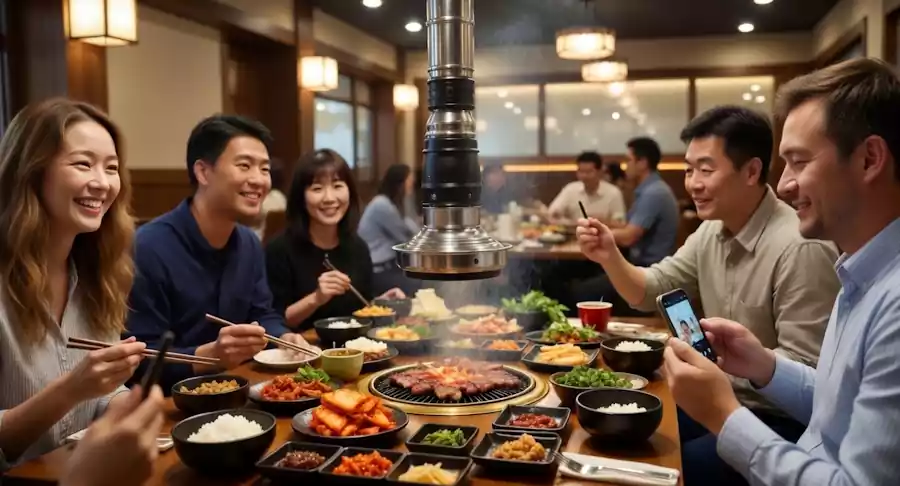
Learning why Korean restaurants give free side dishes often leads to other interesting parts of Korean food culture.
Many Korean meals focus on sharing dishes and eating together. For example, Korean barbecue and stews are often cooked at the table. Everyone participates in the meal instead of eating separately.
These traditions emphasize community and interaction during dining.
Learning about these traditions helps explain why free side dishes in Korean restaurants remain an important part of Korean dining culture today.
6. Frequently Asked Questions

6.1 Are side dishes always free in Korean restaurants?
- Most traditional Korean restaurants serve banchan for free as part of the meal. However, refill policies or premium side dishes may vary depending on the restaurant.
6.2 Can you ask for more banchan?
- Yes. Many restaurants allow refills for simple side dishes like kimchi, bean sprouts, or pickled vegetables. It is still polite to ask first, especially in smaller restaurants.
6.3 Why do Korean meals have so many side dishes?
- Korean meals focus on balance, variety, and shared dining. This is one reason free side dishes in Korean restaurants feel like an essential part of the meal rather than an extra service.
6.4 How is this dining custom connected to wider Korean culture?
Understanding Korean dining culture also opens the door to broader social customs. Many values connected to food, such as respect, hierarchy, and relationships, also appear in other areas of Korean society.
6.5 Do all Korean restaurants serve free side dishes?
- Most traditional Korean restaurants serve banchan as part of the meal. However, modern fast-casual restaurants may provide fewer side dishes.
※ These values of respect and hierarchy also appear in Korean workplace culture and social relationships.
→ Read also: What Is Kkondae? Understanding Korean Office Culture
7. Conclusion: More Than Just Extra Food
The tradition of free side dishes in Korean restaurants is more than simply serving extra food. It reflects a culture that values warmth, sharing, and the feeling of being cared for at the table. When people ask why Korean restaurants give free side dishes, the answer often returns to Jeong, the quiet bond that turns a meal into something more meaningful.
Long after the plates are cleared, that feeling often remains. A table once filled with banchan becomes a memory of welcome, generosity, and connection. In that moment, a simple meal reveals something larger about Korean culture and the way it brings people together.
You may also enjoy exploring other unique traditions in Korean culture and dining.
If you would like to explore more about traditional Korean side dishes and their history, you can learn more about banchan and Korean meal structure here.
→ Explore Banchan in Korean cuisine: