

Many alphabets in the world evolved gradually over centuries, often without clear records of who created them or why. But Hangeul, the Korean alphabet, stands apart. It was intentionally and systematically designed in the 15th century by King Sejong and his scholars to empower the common people with the gift of literacy. What makes Hangeul truly exceptional is its foundation in phonetics, logic, and cognitive science – traits that position it as the most scientific writing system in the world today. As we enter the era of artificial intelligence and natural language processing, Hangeul’s structured simplicity and phonetic precision make it more relevant than ever. This article explores how Hangeul was born from compassion, shaped by science, and remains a powerful tool for future communication technologies.
1. A Script for the People : Hangeul’s Humanitarian Origins
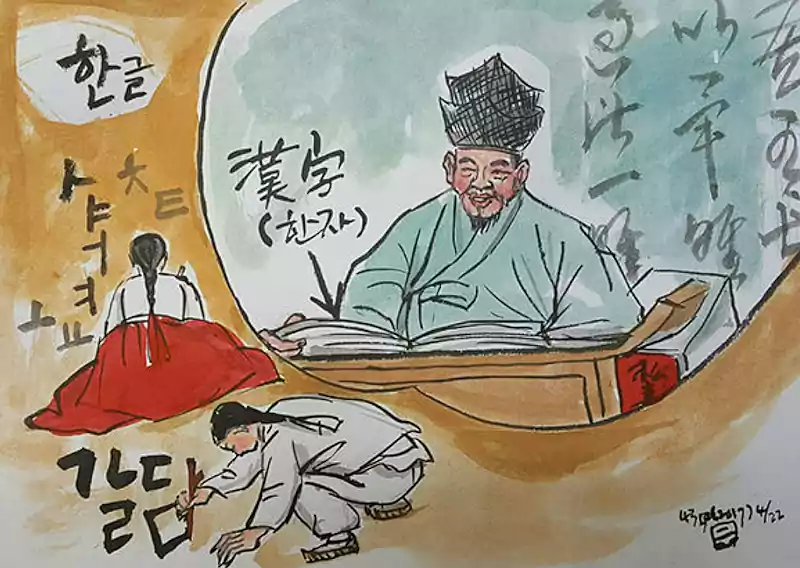
(1) A Nation Without Letters
In 15th-century Joseon Korea, most commoners could not read or write because classical Chinese – used by the elite – was too complex. This created deep social inequality, as the people had no means to express grievances or protect their rights.
(2) King Sejong’s Compassion
King Sejong, driven by deep care for his people, commissioned a new scientific writing system. As stated in the preface of the Hunminjeongeum, the official document announcing Hangeul, “The people are unable to express themselves because they have no letters.” This sentiment became the foundation of an alphabet designed for accessibility and fairness.
2. Scientific Design Principles of Hangeul
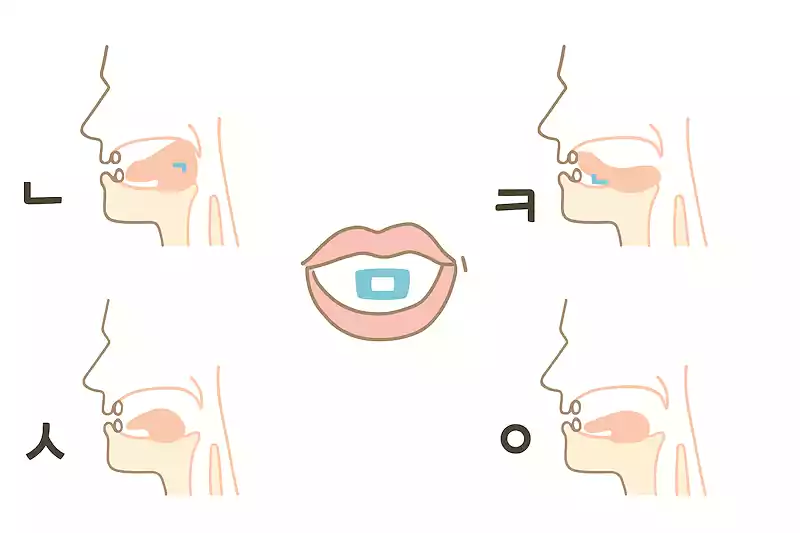
(1) Consonants Based on Articulation
Hangeul consonants are modeled after the shape of the speech organs during pronunciation. For example, ‘ㄱ’ represents the tongue touching the back of the throat, and ‘ㅁ’ mirrors closed lips. This makes Hangeul not only phonetic but also a visually scientific writing system.
(2) Vowels Reflecting Philosophical Balance
Vowels were created based on three elements: heaven (·), earth (ㅡ), and human (ㅣ), reflecting East Asian cosmology. Combining these symbols produces core vowels like ㅏ, ㅓ, ㅗ, and ㅜ. This philosophical and structural foundation makes Hangeul a truly scientific writing system with deep cultural roots.
3. The Unique Value of the Hunminjeongeum Manuscript
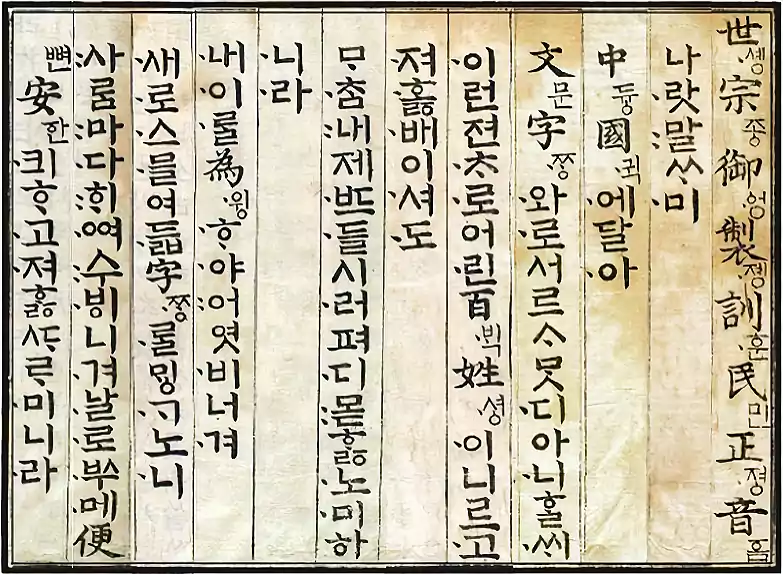
(1) The World’s Only Alphabet with a User Manual
The Hunminjeongeum Haerye, or explanatory edition of the script, not only introduces Hangeul but also explains exactly how and why it was created. This level of transparency and intentionality is unmatched among other alphabets.
(2) Clear Purpose and Method
Unlike other scripts whose origins remain uncertain, Hangeul is documented with a precise rationale, solidifying its place as a purpose-driven scientific writing system.
4. Comparing Hangeul with Other Writing Systems
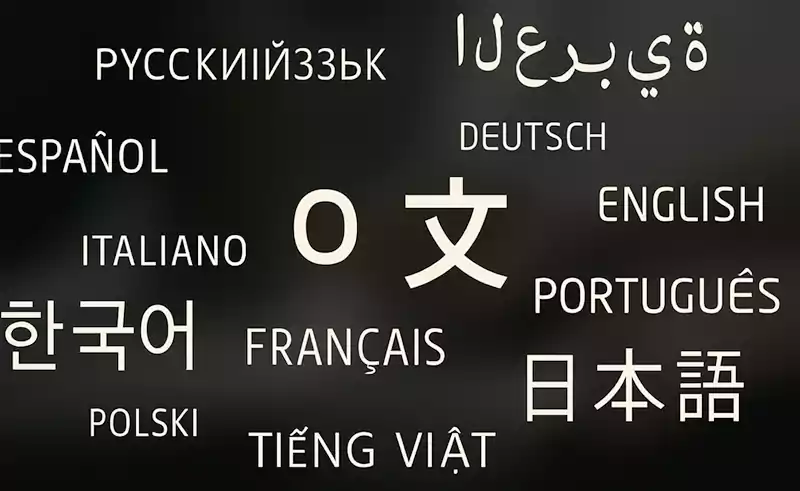
(1) Chinese Characters
Chinese is logographic, requiring the memorization of thousands of characters, with little connection between pronunciation and form.
(2) Latin Alphabet
Although phonetic, the Latin alphabet often suffers from inconsistent spelling rules. Words like “knight” show how spelling and pronunciation can diverge.
(3) Why Hangeul Excels
Hangeul’s design minimizes these issues. Its phonetic precision, logical structure, and modular nature make it a superior scientific writing system that reduces learning errors and accelerates literacy.
5. Transforming Society Through Language

(1) Rapid Learning and Adoption
Because Hangeul was easy to learn, literacy spread quickly after its creation. This helped democratize information and reduce social inequality.
(2) Empowering the People
With Hangeul, ordinary Koreans could write, document contracts, and voice concerns – fundamentally altering their societal roles.
(3) Korea’s Low Illiteracy Rate
Thanks to Hangeul’s efficiency, Korea now boasts one of the lowest adult illiteracy rates globally – just 0.2% in 2023. In contrast, global literacy averages remain around 13%.
6. Linguistic Strengths of Hangeul

(1) Sound-Letter Consistency
Each letter in Hangeul corresponds directly to a sound, ensuring high phonetic accuracy.
(2) Syllabic Blocks
Letters are grouped into syllables, like “ㄱ + ㅏ = 가,” making reading intuitive. This also enhances visual clarity in digital formats.
(3) Expandability
Hangeul allows for the addition of new sounds by modifying strokes, making it a flexible and adaptable scientific writing system.
7. Cognitive Advantages
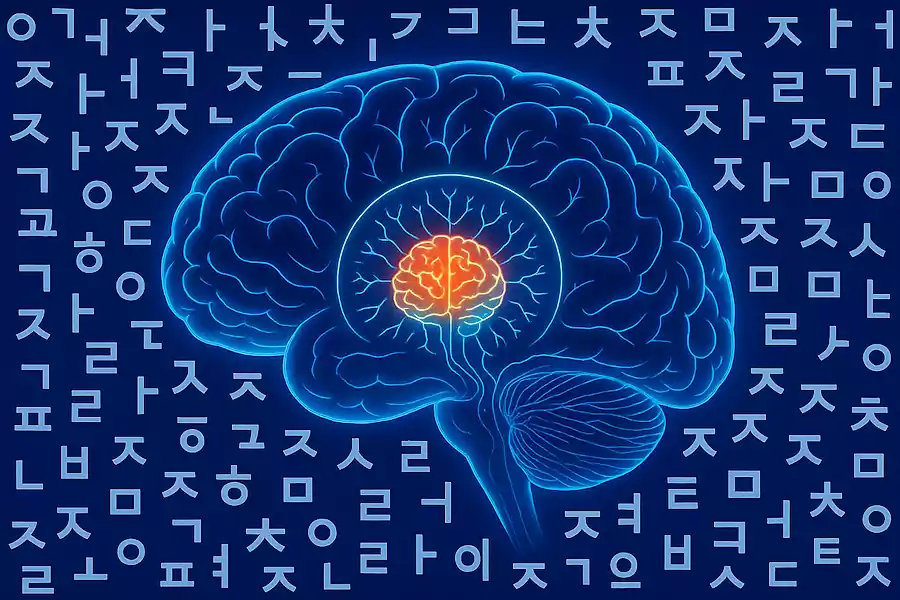
(1) Brain-Friendly Design
Hangeul mirrors the actual mechanics of speech, which helps the brain process the relationship between sound and symbol more effectively.
(2) Efficient Communication
Compared to English, Korean can convey ideas more compactly. For example, “psychology” becomes “심리학”—just three characters.
(3) Ideal for Research
Because of its clarity, Hangeul is widely used in linguistic and cognitive science research, further validating it as a scientific writing system.
8. Recognition and Global Value

(1) UNESCO Recognition
UNESCO created the King Sejong Literacy Prize in honor of Hangeul’s contribution to global literacy, recognizing it as more than a national script – an international cultural asset.
(2) Digital Advantages
In the digital age, Hangeul’s syllabic structure and consistent logic make it easy to input and process, even on smartphones and AI platforms.
9. Hangeul in the AI Era

(1) Modular and Machine-Friendly
Hangeul’s clear rules and syllable blocks make it ideal for training AI in speech recognition and language processing.
(2) Low Error Rates in Voice Recognition
Studies show that Korean voice recognition can reach 99.7% accuracy in standard pronunciation – thanks to Hangeul’s systematic design.
(3) Used by Tech Giants
Companies like Google, Naver, and Kakao actively use Hangeul data for developing AI systems. This further proves its relevance as a scientific writing system fit for the future.
10. Conclusion: A Timeless, Future-Proof Alphabet
Hangeul was created to serve the people, and it continues to do so – both in everyday life and in the development of cutting-edge technologies. As the most intentional and scientific writing system, Hangeul connects past wisdom with future innovation, standing as a symbol of Korea’s intellectual and cultural legacy.


