
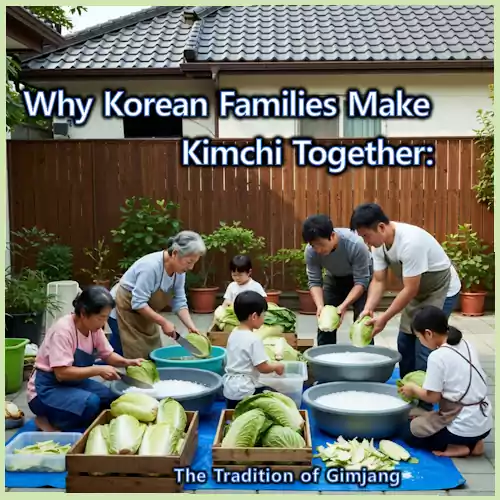
Gimjang is the traditional Korean practice of making and sharing kimchi for winter. and remains an important cultural event today. In Korea, it is a late-autumn tradition in which families gather to prepare kimchi for winter. The custom reflects cooperation, seasonal living, and strong family bonds.
1. What Is Gimjang?
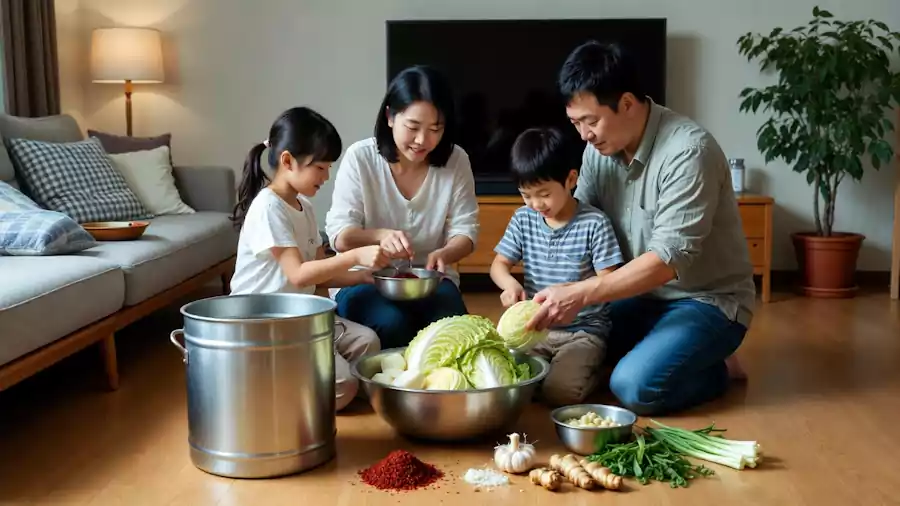
Gimjang is the traditional Korean practice of making and sharing large quantities of kimchi in late autumn. Families often prepare dozens or even hundreds of napa cabbages in a single day. The process includes salting cabbage, preparing spicy seasoning, and storing kimchi so it can ferment slowly throughout winter.
This annual event began as a practical way to preserve vegetables during the cold season. Over time, it developed into a cultural ritual that connects generations through shared work and food preparation.
2. How Is Kimchi Made During Gimjang?
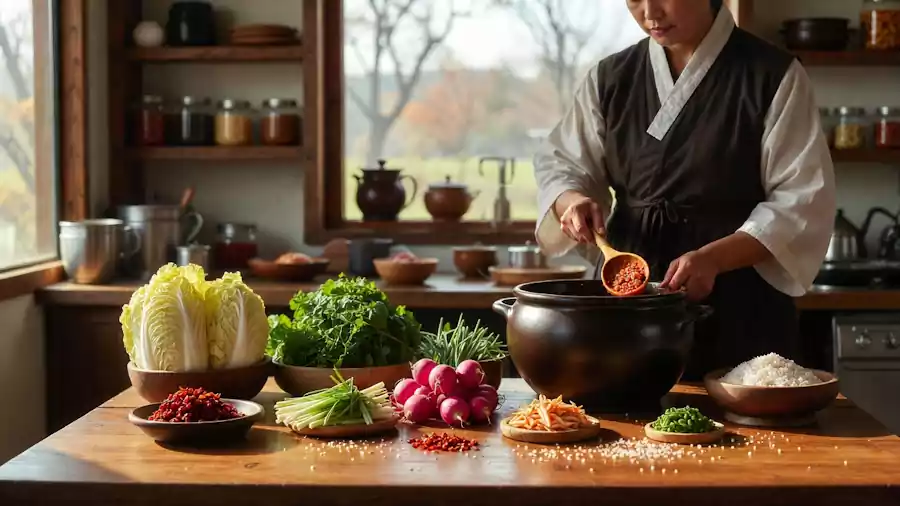
Families follow several traditional steps to prepare kimchi. First, napa cabbage is salted for hours so the leaves soften and absorb seasoning. Next, a mixture of chili powder, garlic, ginger, fish sauce, and other ingredients is prepared.
Each cabbage is carefully coated with the seasoning paste. The finished kimchi is then packed into containers where it begins fermenting. This process has been passed down through generations and remains central to Korean food culture.
3. Why Do Korean Families Make Kimchi Together?
The tradition is built around cooperation and shared effort. Preparing large amounts of kimchi requires many hands and coordinated work. Family members gather to wash cabbage, mix seasoning, and pack kimchi together.
Working side by side makes the task more efficient while creating time for conversation and connection. For many households, this annual event is also a meaningful way to reconnect with relatives.
4. When Does Gimjang Take Place?
Most Gimjang events happen in late autumn, usually between November and early December. The timing is important because cooler temperatures help kimchi ferment slowly and safely.
In Korea, weather forecasts sometimes even mention the kimchi-making season. Families wait for the right temperature before beginning. This seasonal timing shows how closely the tradition remains tied to agricultural cycles and natural rhythms.
5. The Cultural Meaning of Gimjang
Beyond food preparation, this custom represents strong community values in Korean society. After making kimchi, families often share portions with neighbors, friends, or relatives. Some communities also donate kimchi to people who need support during winter.
These acts of generosity reflect the deeper values of Korean food culture. UNESCO recognized Gimjang as an Intangible Cultural Heritage of Humanity in 2013 because of its cultural importance.
6. Practical Tips for Experiencing Gimjang
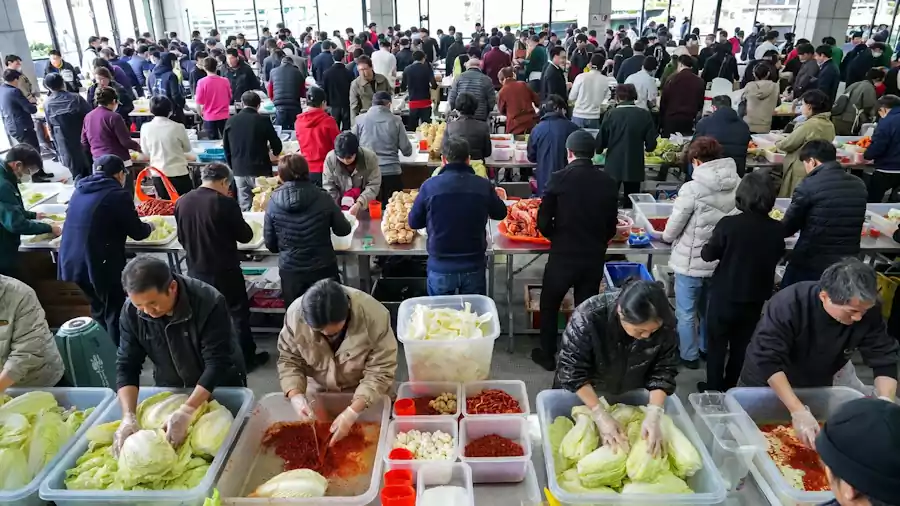
Visitors sometimes have opportunities to join Gimjang events through cultural programs or local communities. If you participate, it is best to wear comfortable clothing because red pepper seasoning can easily stain fabric.
You may also want to learn a simple phrase to show appreciation. Saying “수고하셨습니다 (Su-go-ha-syeot-seup-ni-da)” politely thanks people for their hard work. Taking part in this tradition firsthand can provide a deeper understanding of Korean food culture.
7. Related Korean Culture to Explore Next
If you are interested in Gimjang, there are many other traditions connected to Korean cuisine. Korean meals often include many side dishes called banchan, which reflect the culture of sharing food at the table.
These practices show that Korean food culture is not only about taste but also about seasonal living, family cooperation, and community values.
You can also explore why Korean restaurants often give free side dishes. This dining custom shares a similar spirit, showing how food in Korea often represents generosity, hospitality, and a sense of community.
8. FAQ : Korean Kimchi Tradition
8.1. What is Gimjang in Korea?
- Gimjang is the traditional Korean practice of making large amounts of kimchi together in late autumn so families can store fermented vegetables for winter.
8.2. When is Gimjang season?
- The season usually occurs between November and early December, when colder temperatures help kimchi ferment slowly.
8.3. Why do Koreans make kimchi together?
- Preparing kimchi requires many hands. The tradition encourages family cooperation, community sharing, and cultural continuity.
8.4. Why is Gimjang important in Korean culture?
- It represents community values and seasonal living. Because of its cultural significance, UNESCO recognized Gimjang as an Intangible Cultural Heritage in 2013.
8.5. How much kimchi do families make during Gimjang?
- Some families prepare dozens or even hundreds of napa cabbages during a single Gimjang day.
9. Final Thoughts
Every autumn, families and communities come together around a simple ingredient: cabbage. Yet this event represents much more than preparing food for winter. It reflects family bonds, cultural memory, and a long tradition of shared effort.
For many Koreans, Gimjang is not just about making kimchi—it is about preserving culture and continuing the spirit of cooperation and sharing.
Today, Gimjang continues to remind people that food traditions can strengthen families and communities across generations.
You can also learn more from UNESCO, which recognized this practice as a living tradition of family cooperation and sharing.